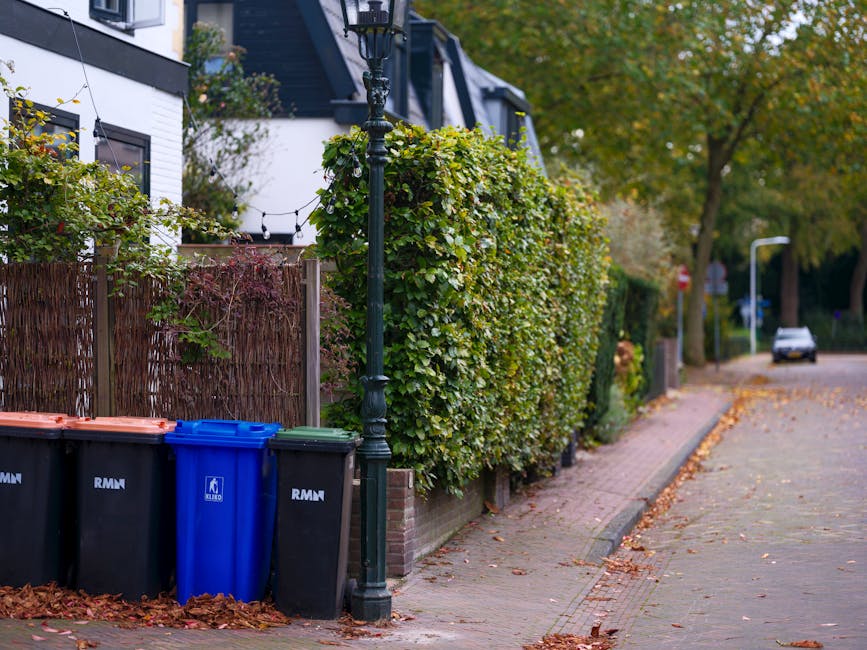
What to know about Haringey Council garden waste rules for gardeners
If you garden in Haringey, waste disposal is one of those jobs that can quietly make or break your day. A tidy border, a freshly cut hedge, or a big clear-out after a windy week all create green waste, and the rules around it can feel a bit fiddly if you have not dealt with them before. What to know about Haringey Council garden waste rules for gardeners is not just about avoiding the wrong bin or the wrong collection day. It is also about working cleanly, reducing contamination, and making sure your routine fits local expectations without adding stress.
In practice, the biggest issues are usually straightforward: what counts as garden waste, how it should be separated, what happens after large pruning jobs, and when a gardener should arrange extra clearance rather than rely on normal household collection. Get those basics right and life is easier. Get them wrong and you can end up with missed collections, extra costs, or a very awkward pile of cuttings sitting in the rain. Let's face it, nobody wants that on a Monday morning.
This guide breaks the topic down in plain English. You will get a practical overview of how the rules usually work, why they matter for gardeners, where the common mistakes happen, and how to choose the most sensible disposal route for the job in front of you. If your work also involves regular maintenance or heavier clear-outs, it may help to look at broader garden maintenance support or more intensive garden clearance when the waste volume gets out of hand.
Table of Contents
- Why the rules matter for gardeners
- How garden waste handling usually works
- Key benefits and practical advantages
- Who needs this and when it makes sense
- Step-by-step guidance
- Expert tips for better results
- Common mistakes to avoid
- Tools, resources and recommendations
- Law, compliance, standards, or best practice
- Options, methods, or comparison table
- Case study or real-world example
- Practical checklist
- Conclusion
- Frequently Asked Questions
Why What to know about Haringey Council garden waste rules for gardeners Matters
Garden waste is not the glamorous part of gardening. The borders and lawns get the attention; the bags, bundles, and muddy wheelie bins do not. But disposal rules matter because they affect everything from efficiency to cleanliness to how professional your work looks to the client.
For gardeners in Haringey, the issue is often less about "getting rid of waste" in the abstract and more about managing it in a way that fits local collection systems and household expectations. A pile of hedge trimmings is not the same as soil, roots, treated timber, or mixed rubbish. Council systems tend to be much happier with clean, separated organic waste than with a random mix of cuttings, stones, flowerpots, and old plastic labels. That mixing problem crops up all the time, by the way. A few minutes of sorting can save a lot of grief later.
This also matters for trust. If you are a gardener working for local homeowners, tenants, landlords, or small businesses, your approach to waste handling says a lot about your standards. A neat job at the front garden but a messy skip area at the side passage? Not a great look. If you want a broader operational standard for your work, it can help to align waste handling with your overall services overview and sustainability approach, rather than treating it as an afterthought.
There is also a practical health and safety angle. Overfilled bags, sharp canes, damp green waste, and hidden broken glass are classic garden-job hazards. Good waste handling reduces trips, strains, contamination, and unpleasant surprises. Frankly, the smell of a half-forgotten sack of wet grass clippings in warm weather is reason enough to stay organised.
Expert summary: The smartest way to deal with Haringey garden waste is usually simple: separate organic material early, keep soil and rubble out of green waste, and choose the disposal route that matches the size of the job.
How What to know about Haringey Council garden waste rules for gardeners Works
Although the exact collection arrangements can change over time, the basic idea is fairly consistent across London boroughs. Garden waste is usually treated as a distinct waste stream, meaning it should be kept separate from general household rubbish. That includes things like grass cuttings, leaves, small prunings, weeds, and similar organic material. Larger woody material, soil, turf, and mixed landscaping waste can be treated differently, depending on local collection arrangements and the scale of the job.
For everyday gardening, the most useful mindset is this: clean, green, and separated. If the material is genuinely garden waste, keep it free of contamination. If it is not really green waste, do not sneak it in and hope for the best. Councils and waste collectors have good reason to reject contaminated loads, and in fairness, they are right to do so. A single bag can spoil an otherwise usable collection.
In practical terms, many gardeners work with one of three disposal routes:
- Household or council garden waste collections for smaller, routine amounts.
- Private removal or clearance for bulkier jobs, overgrown plots, or mixed waste.
- On-site composting or reuse for suitable organic material, where space and the client's preferences allow it.
What works best depends on volume, frequency, and the type of material. A quick lawn cut is one thing. A full hedge reduction after years of growth is another. If you are doing the latter, you may be better served by pairing regular upkeep with hedge trimming services and a planned disposal method rather than improvising at the end of the day.
A useful way to think about it is this: the smaller and cleaner the waste, the easier the collection. The heavier and more mixed it becomes, the more likely you need a dedicated removal solution. Simple enough, but it saves headaches.
Key Benefits and Practical Advantages
Following garden waste rules properly is not just about compliance. It makes the work smoother, faster, and more predictable. That matters whether you garden full time or you are helping a client manage a once-a-season tidy-up.
- Less time wasted sorting later: If waste is separated as you cut, prune, and clear, you do not end up with a chaotic final sweep.
- Lower risk of rejected collections: Cleaner loads are easier to accept and process.
- Better presentation for clients: A tidy waste process makes a garden look truly finished.
- Improved sustainability: Organic waste is more likely to be composted or recycled when it is not contaminated.
- Safer working conditions: Fewer mixed materials means fewer cuts, strains, and trips.
There is also a commercial benefit if you run a gardening service. Clear waste handling builds confidence. Clients tend to notice the details: how bags are stacked, whether clippings are left across the pavement, and whether you protect shared areas while moving waste out. Those little details matter more than people admit.
If your work includes lawns, borders, and periodic clearance in the same property, a structured routine can make a real difference. For example, routine mowing and clipping collection are much easier to manage alongside lawn mowing services than as a one-off panic at the end of the month.
Who This Is For and When It Makes Sense
This topic is relevant to a few different people, and each group has a slightly different challenge.
Home gardeners
If you prune shrubs, mow grass, or clear leaves at home, you probably need a simple system for small volumes of waste. The aim is to avoid overcomplicating things while still keeping within local collection expectations.
Professional gardeners
If you work on multiple properties, the challenge is consistency. One client may generate only a few bags of clippings. Another may need a full clearance after months of neglect. Professionals need a repeatable process, not just good intentions.
Landlords and letting agents
Vacant gardens often collect more waste than people expect. There may be fly-tipped rubbish, overgrowth, and mixed debris from previous occupants. In those cases, council garden waste rules are only one part of the picture, and a broader clearance plan is usually the sensible route.
Design and landscaping projects
If you are reshaping a garden, installing new beds, or carrying out structural changes, waste is likely to include soil, old timber, broken slabs, roots, and packaging as well as organic material. That is where normal green waste rules stop being enough, and a more complete disposal approach becomes necessary. For bigger transformations, landscape gardening or landscaping support may be more appropriate than trying to manage everything through routine collection.
Truth be told, many problems start when people assume all garden debris can be handled the same way. It cannot. A bag of grass is not a bag of broken pots. Obvious, yes, but it is amazing how often that distinction gets blurred once the job is underway.
Step-by-Step Guidance
If you want a straightforward way to stay on the right side of Haringey garden waste expectations, use this sequence. It is simple, but simple is good here.
- Identify the waste stream. Separate grass cuttings, leaves, soft prunings, soil, rubble, wood, and general rubbish.
- Remove contamination early. Pick out plastic ties, broken ceramics, old plant pots, wire, and packaging before the waste piles up.
- Decide whether the amount is routine or bulk. A few bags may suit standard collection arrangements. A large clearance may need a dedicated removal plan.
- Bag or bundle properly. Use suitable sacks and don't overload them. Overfilled bags split at the worst time, usually near the gate.
- Keep access clear. Make sure waste can be moved safely from the garden to the collection point without blocking paths or entrances.
- Store waste temporarily in a tidy way. If collection is not immediate, keep it contained and away from areas where it can blow around.
- Arrange the final disposal route. Choose council collection, composting, or private clearance based on the material and volume.
If you are working on a property where the garden has not been maintained for a while, start with the worst material first. Heavy ivy, thick stems, and accumulated debris can make the rest of the job feel twice as big. Once that is out of the way, the lighter clippings are much easier to manage.
A good habit is to sort as you go. That one habit, honestly, saves more time than any fancy tool.
Expert Tips for Better Results
There is a difference between "technically sorted" and "well managed." The second one is what clients remember. Here are a few practical things that experienced gardeners tend to do without making a song and dance about it.
- Keep green waste dry if you can. Wet clippings are heavier, slippier, and more unpleasant to handle. A bit of rain is one thing; a soaking pile is another.
- Cut waste down to manageable lengths. Long branches and tangled stems are awkward in bins, bags, and narrow passages.
- Use separate containers for different materials. One for green waste, one for woody offcuts, one for non-organic rubbish. Straightforward, but effective.
- Plan the route out of the garden. If the side gate is narrow or the path has steps, think about the movement of waste before you start cutting.
- Don't leave soil attached to roots unnecessarily. Soil adds weight and can turn a tidy green load into mixed waste very quickly.
- Be realistic about scale. If the job has moved from "garden tidy" into "clearance project," stop treating it like a normal weekly sweep.
One quiet but important tip: communicate clearly with clients. If the waste is staying on site for collection later, say so. If you need extra time for sorting, say that too. People are usually fine with practical delays when the reason is clear. Silence, on the other hand, is what creates awkwardness.
And yes, a label on a bag can save an argument. Not every job needs a label, but sometimes it does. Life is funny like that.
Common Mistakes to Avoid
The most common errors are rarely dramatic. They are small, repetitive things that add up.
- Mixing soil with green waste: Soil is heavy and often treated separately from soft garden waste.
- Including plastics or metal: Plant pots, tags, wire, and ties should not be bundled in as if they were organic material.
- Overfilling bags: If the bag can barely be lifted, it is too full.
- Leaving waste in shared access areas: Paths, driveways, and communal entrances should be kept usable and safe.
- Assuming every council collection works the same way: Collection rules can differ by service type, schedule, and waste category.
- Leaving the problem for later: Garden waste gets worse when it sits. It compresses, smells, and takes up more space than you remember.
A classic one is the "I'll sort it tomorrow" pile. Tomorrow arrives, the pile has settled, the rain has done its work, and suddenly the job is twice the effort. We have all been there, in one form or another.
Tools, Resources and Recommendations
You do not need a van full of specialist gear to handle garden waste properly, but a few basics make a real difference.
- Heavy-duty garden sacks: Better for clippings, leaves, and light prunings than thin household bags.
- Wheelbarrow or carrier tub: Useful for moving waste without making repeated trips with armfuls of material.
- Bypass shears or secateurs: Help reduce bulky stems before bagging.
- Tarpaulin: Handy for keeping a work area tidy and gathering loose cuttings into one place.
- Gloves: Basic, but essential when dealing with thorny trimmings or hidden debris.
- Compost area or green bin space: If the garden and local arrangements support it, this can be the simplest route for smaller organic waste.
For larger or recurring jobs, it is worth planning waste handling as part of the service rather than tacking it on at the end. If you are booking a broader maintenance schedule, the process tends to run more smoothly when clearance, cutting, and disposal are all thought through together. That is especially true if the work involves tree lopping and removal, where branches, trunks, and woody material create a different disposal challenge altogether.
If sustainability matters to you or your clients, it also helps to think beyond the immediate job. A proper sorting habit, reuse of suitable mulch, and reduced contamination all support better recycling outcomes. For a broader sustainability mindset, recycling and sustainability principles can sit neatly alongside everyday gardening work.
Law, Compliance, Standards, or Best Practice
Gardeners in Haringey should approach waste handling with a general UK duty-of-care mindset: waste should be managed responsibly, kept separated where appropriate, and passed on only through suitable routes. Without getting lost in legal jargon, the principle is simple. If you generate waste, you remain responsible for ensuring it is handled properly.
For day-to-day work, that means:
- not mixing garden waste with general rubbish unless the disposal method specifically allows it;
- not leaving waste where it could become a nuisance or hazard;
- using appropriate disposal channels for large or mixed loads;
- avoiding contamination that could affect reuse or recycling;
- keeping enough records or notes for professional jobs if there is any question about where waste went.
If you are a professional gardener, best practice also includes having clear service terms, sensible expectations around waste removal, and safe working methods. It can sound a bit formal, but it saves trouble later. A simple services agreement and secure payment process can help everyone understand what is included and what is not, which is why operational pages like terms and conditions and payment and security matter more than people realise.
Health and safety should sit alongside compliance too. Wet leaves on paving, trip hazards from stacked bags, and manual handling issues are all avoidable if the job is planned properly. It is ordinary, everyday risk management - nothing glamorous, but very necessary. If you want to see how a provider frames safe working more broadly, the health and safety policy and insurance and safety information are useful references for the standards expected from a professional service.
Options, Methods, or Comparison Table
Choosing how to handle garden waste usually comes down to volume, material type, and speed. The table below gives a simple comparison.
| Method | Best for | Advantages | Limitations |
|---|---|---|---|
| Routine council or household collection | Small, clean volumes of garden waste | Simple, familiar, usually cost-effective | May have limits on volume, material type, or timing |
| On-site composting | Leaves, grass, and other suitable organic waste | Low waste, sustainable, useful for future beds | Needs space, time, and the right material mix |
| Private garden clearance | Large clear-outs, overgrowth, mixed debris | Fast, flexible, handles bulk | Usually more expensive than basic collection |
| Mixed-load removal | Projects with soil, branches, and non-organic items | Practical for landscaping work | Needs careful sorting and may involve extra handling |
The best option is not always the cheapest one on paper. If you have to make three extra trips, re-sort the load, and store bags all weekend, the "cheaper" route can become the more annoying route very quickly. Convenience has value. So does not dragging wet branches through a hallway.
Case Study or Real-World Example
Picture a typical Haringey back garden after a spring tidy-up. The lawn has been cut, the hedge has been shaped, and a few shrubs have been reduced to stop them leaning over the path. At first glance, it does not look like a huge job. But once everything is cut back, the waste adds up: several bags of clippings, a bundle of woody stems, a bucket of old ties, and a small pile of loose soil from a border edge.
The first instinct might be to throw it all into one load and deal with it later. That is where the trouble starts. The mixed material makes collection awkward, the heavy soil puts strain on the bags, and the plastic ties contaminate the green waste. The smarter approach is to split it from the start: soft green waste in one pile, woody cuttings in another, and non-organic bits cleared into a separate container.
By the time the garden is swept down, the load is easier to move and far easier to dispose of. The job finishes with less frustration, fewer spills, and a cleaner look on site. That final sweep matters. You can almost hear the difference when the paving is properly clear under your boots.
In a more complex case, say an overgrown rental garden, the method shifts again. If the work has gone beyond normal maintenance, the better choice may be a dedicated clearance visit rather than trying to force everything into a standard collection routine. That is where a service like services overview planning becomes useful, because it helps match the job to the right disposal method instead of guessing at the end.
Practical Checklist
Use this quick checklist before you finish a gardening job in Haringey:
- Have I separated green waste from general rubbish?
- Have I removed plastic ties, labels, wire, and broken pots?
- Are bags or bundles manageable and safe to lift?
- Is any soil, turf, or rubble kept separate?
- Do I know whether this job needs a routine collection or a bulk clearance route?
- Have I kept paths, gates, and entrances clear?
- Is the waste stored neatly if it is waiting for collection?
- Have I considered composting any suitable material on site?
- Have I told the client what is included in the disposal plan?
- Is the final area clean enough to count as finished, not just "mostly done"?
If you can tick most of those boxes, you are probably in good shape. If not, pause and sort the load before it turns into a bigger problem than it needs to be.
Conclusion
What to know about Haringey Council garden waste rules for gardeners comes down to a simple principle: keep garden waste clean, separate, and proportionate to the disposal method you choose. Smaller jobs can often be handled through routine arrangements or composting. Bigger, mixed, or heavily overgrown jobs usually need a more considered solution.
For gardeners, the real advantage is not just compliance. It is the calm that comes from knowing the job is under control from start to finish. Clean waste handling protects your time, your client's property, and your own standards. It also makes the work feel more professional, which matters whether you are pruning a front hedge or clearing a neglected back garden on a grey Tuesday afternoon.
If you are planning a bigger clear-out or want help building a more efficient maintenance routine, it is worth exploring related support such as garden clearance and garden maintenance. A tidy system saves effort, and a tidy finish says a lot. Little things, really. But they matter.
Get a free quote today and see how much you can save.
And if there is one final thought to take away, it is this: a well-kept garden always feels better when the waste is handled with the same care as the planting.
Frequently Asked Questions
What counts as garden waste in Haringey?
In general, garden waste means organic material such as grass cuttings, leaves, small branches, weeds, and hedge trimmings. Soil, rubble, plastic pots, and general rubbish are usually treated differently, so they should be separated before collection or disposal.
Can I put soil with green garden waste?
Usually, no. Soil is heavy and can contaminate green waste. It is better kept separate, especially if you are using a council collection or trying to recycle organic material. A small amount stuck to roots is one thing; a bag full of soil is another.
Do gardeners need to sort waste before collection?
Yes, sorting is strongly recommended. It makes collections cleaner, reduces the chance of rejection, and helps you avoid mixing recyclable organic waste with non-organic material. It also makes your work look far more organised.
What should I do with hedge trimmings and branches?
Smaller hedge trimmings often fit garden waste collections or composting. Thicker branches, woody stems, and larger amounts from heavy pruning may need chopping down further or removing through a clearance service. If the pile looks like it could stand up and argue back, it is probably too bulky for a normal bag.
Is garden waste collection the same as general rubbish collection?
No, not usually. Garden waste is generally handled as a separate waste stream. That is why it is important not to mix it with household rubbish, old pots, packaging, or broken items unless the disposal method explicitly allows mixed loads.
How do I handle garden waste after a big clearance job?
For large jobs, separate waste early and decide whether the material is suitable for standard collection, composting, or dedicated clearance. If the job includes overgrowth, roots, turf, or mixed debris, a planned removal method is usually the most efficient choice.
Can I compost all garden waste?
Not all of it. Soft green waste such as leaves, grass, and many plant cuttings compost well. Larger woody material, diseased plants, and contaminated waste may not be suitable. A compost heap is useful, but it is not a universal solution.
What are the most common mistakes gardeners make with waste?
The big ones are mixing waste types, overfilling bags, ignoring soil contamination, and leaving piles sitting around too long. These mistakes are easy to make when the job is rushed, which is exactly when they become most annoying.
How can I make waste handling safer on site?
Use gloves, lift sensible loads, keep paths clear, and stack bags where they will not block movement. If you are dealing with damp waste, sharp cuttings, or narrow access, take a little extra time. It is usually worth it.
Do professional gardeners need written terms for waste removal?
It is a very good idea. Written terms help explain what is included, what counts as extra disposal work, and how larger loads are handled. That clarity prevents arguments later and keeps the service feeling professional.
What if a garden job creates mixed waste, not just green waste?
Then it is probably beyond simple garden waste handling. Mixed waste from landscaping or clearance jobs often needs a broader disposal plan, especially if soil, timber, rubble, and organic material are all involved. In those cases, trying to force everything into one system is usually a false economy.
When should I choose garden clearance instead of regular maintenance?
If the waste volume is unusually high, the garden is heavily overgrown, or there is a mix of organic and non-organic material, garden clearance is usually the better fit. Regular maintenance works best when the garden is already under control and the waste stream stays manageable.